
Sanity Structure Plugin
The Vyuh structure plugin (@vyuh/sanity-plugin-structure) is a powerful tool that helps you organize and combine Sanity schemas from multiple features into a unified master schema. This guide explains how to use the plugin effectively.
Overview
When building a Vyuh application, each feature defines its schemas and exports them using the FeatureDescriptor class from @vyuh/sanity-schema-core. This approach ensures:
- Consistent schema organization across features
- Type-safe schema definitions
- Automatic schema registration and combination
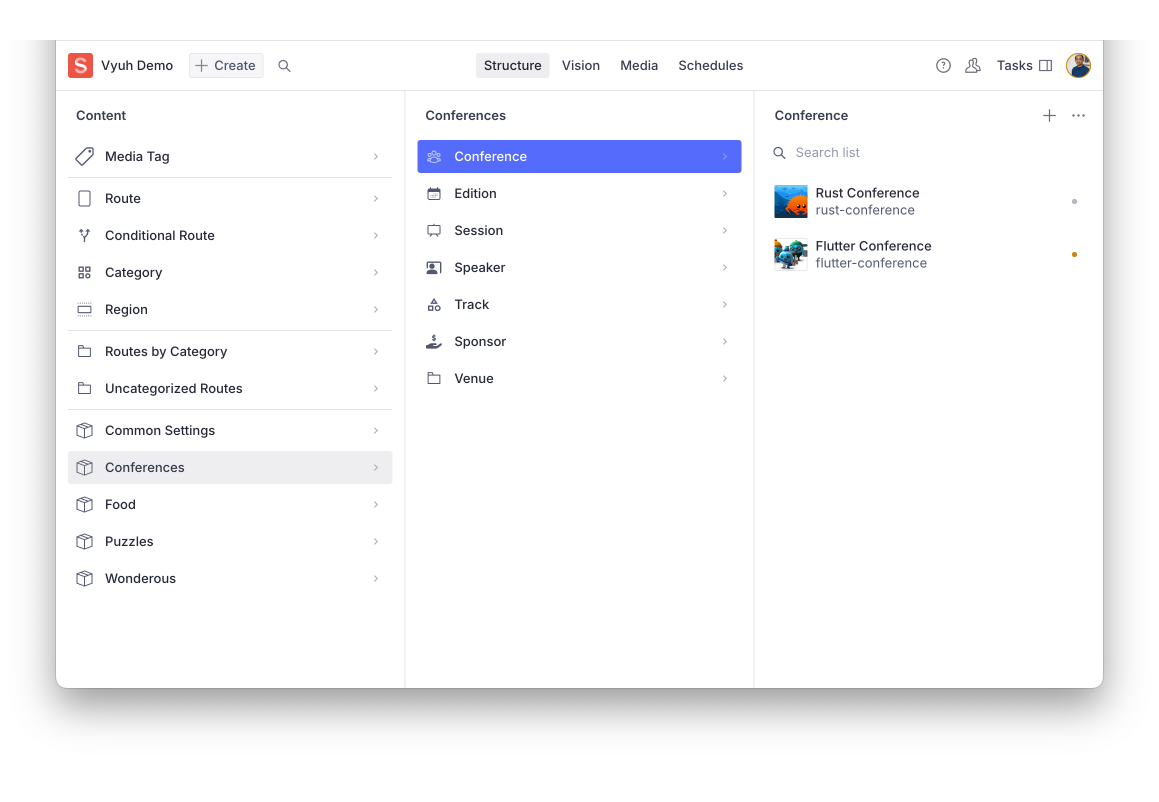
- Automatic categorization of schemas by feature in the Desk Structure
The Vyuh structure plugin reads the FeatureDescriptor instances and assembles them into a single schema that can be used in your Sanity Studio, with automatic grouping of schemas by feature.
Installation
Install the plugin package in your Sanity Studio project:
cd my-sanity-studio
pnpm add @vyuh/sanity-plugin-structure
Install the core schema package in your features:
cd features/my-feature
pnpm add @vyuh/sanity-schema-core
These packages provide:
@vyuh/sanity-schema-core: Core utilities for defining and organizing Sanity schemas, including theFeatureDescriptorclass@vyuh/sanity-plugin-structure: The Vyuh structure plugin that combines and organizes your feature schemas
Using pnpm Workspaces
Consider using pnpm workspaces to better organize your Sanity Studio and feature packages:
# pnpm-workspace.yaml
packages:
  - 'studio'
  - 'features/*'
This setup allows you to keep all feature packages and studio in one repository, share dependencies across packages, use consistent versioning, and run commands across all packages.
Using FeatureDescriptor
Basic Structure
Each feature exports its schemas using a FeatureDescriptor instance:
import {
  BuiltContentSchemaBuilder,
  FeatureDescriptor,
} from '@vyuh/sanity-schema-core'
import { conference } from './documents/conference'
import { session } from './documents/session'
import { speaker } from './documents/speaker'

export const conf = new FeatureDescriptor({
  name: 'conf',
  title: 'Conference Feature',
  description: 'Conference management feature',
  contentSchemaBuilders: [
    new BuiltContentSchemaBuilder(conference),
    new BuiltContentSchemaBuilder(session),
    new BuiltContentSchemaBuilder(speaker),
  ],
})
Feature Descriptor Properties
The FeatureDescriptor accepts these key properties:
name: Unique identifier for the featuretitle: Display name for the featuredescription: Optional descriptioncontents: Array of content descriptors that extend content items with additional capabilities (layouts, validations, etc.)contentSchemaBuilders: Array of schema builders that define the actual schema types and their structure
Additional Properties
FeatureDescriptor also supports the following advanced properties:
contentModifiers: Schema type definitions that modify content schemascontentSchemaModifiers: Functions that can modify content schemasactions: Schema definitions for feature-specific actionsconditions: Schema definitions for feature-specific conditionsanalyticsContexts: Schema definitions for analytics contexts
Customizing Content Descriptors
To add custom layouts to a content type:
import { ContentDescriptor } from '@vyuh/sanity-schema-core'
import { conferenceLayout } from './layouts/conference'

class ConferenceDescriptor extends ContentDescriptor {
  constructor(props: Partial<ConferenceDescriptor>) {
    super('conf.conference', props)
  }
}

export const conf = new FeatureDescriptor({
  name: 'conf',
  title: 'Conference Feature',
  contents: [
    new ConferenceDescriptor({
      layouts: [conferenceLayout],
    }),
  ],
  contentSchemaBuilders: [
    new BuiltContentSchemaBuilder(conference),
  ],
})
Schema Registration
In your Sanity configuration, register your features using the vyuh plugin:
import { defineConfig } from 'sanity'
import { vyuh } from '@vyuh/sanity-plugin-structure'
import { conf } from './features/conference'
import { blog } from './features/blog'

export default defineConfig([
  {
    name: 'default',
    title: 'My Vyuh Studio',
    basePath: '/',
    projectId: 'your-project-id',
    dataset: 'production',

    plugins: [
      vyuh({
        features: [conf, blog],
      }),
    ],
  },
])
INFO
The vision and media plugins are also included with the vyuh plugin.
Best Practices
- Feature Namespacing: Prefix schema types with the feature name (e.g.,
conf.session) - Type Safety: Use TypeScript for schema definitions using the core types from Sanity such as
defineType,defineField, etc. - Modular Organization: Keep related schemas together in feature packages
- Documentation: Include descriptions for fields and types
Summary
The Vyuh Structure Plugin automates the assembly and organization of Sanity schemas from multiple features into a unified studio. By using FeatureDescriptor instances and the vyuh() plugin, you get consistent schema organization, automatic categorization in the desk structure, and a scalable approach to managing schemas across your application.